Most small businesses approach content marketing the same way: they decide they should probably be doing it, start a blog or an Instagram, post a few times, get busy, and three months later they’ve published four things and quietly given up.
The problem is almost never ideas or ability. It’s not having a system. Content without a strategy is just content creation, disconnected outputs that don’t compound into anything.
Why video first
Video is the highest-trust content format a small business can produce. Watching someone speak, their tone, their confidence, whether they actually know what they’re talking about, builds credibility faster than written content. It’s also the most efficient raw material for everything else.
A 60–90 second video answering a question your customers ask becomes a social post, a blog post (via transcription), pull quotes for graphics, an audio clip for a podcast, and a script for a longer video later. That’s five to seven pieces of content from one shoot on a phone. Everything else flows from the video. That’s the leverage model.
Step 1: who are you talking to and what do they need to know?
Before creating anything, write down the five questions your customers ask you most often. The things you explain every week. You know the answers cold, they’re your first five pieces of content. Then expand: what misconceptions exist in your industry? What do people get wrong? What do they wish they’d known before they hired someone like you? Those all become content too.
Step 2: pick one channel and go deep
Don’t try to be everywhere. Pick the one platform where your actual customers spend time and commit to it before expanding. LinkedIn for B2B and professional services. Instagram or Facebook for consumer-facing local businesses. TikTok or Reels for younger consumer audiences. YouTube for long-form authority building.
Your blog sits alongside this (it hosts the written versions and supports SEO) but it’s not the primary channel. The primary channel is where you build an audience. The blog is where that content lives permanently.
Step 3: a realistic publishing schedule
Consistency beats frequency. One piece of content per week, every week, for a year, is worth more than three pieces a week for three months followed by silence. Silence is what kills content strategies, not posting too little, not posting the wrong things, just stopping.
Work out what you can actually sustain. If that’s one video a week, that’s the schedule. Build it around that and stick to it.
Step 4: the repurposing workflow
Film the video. Get it transcribed (Otter.ai, Descript, or a cheap Fiverr transcription). Turn the transcript into a blog post. Pull the key point as a standalone social caption. Cut a shorter clip for Stories or Reels. That’s your content week sorted from one piece of primary content.
The workflow doesn’t need to be more complicated than this. It needs to actually happen.
Step 5: measure what matters
At the start, follower count and views are vanity metrics. What you actually want to see is whether your audience is growing over time (even slowly), whether the right people are engaging, and eventually whether it’s generating enquiries or leads. Track these over quarters, not weeks, content marketing compounds slowly, and most people give up before they see the compounding start.
The template
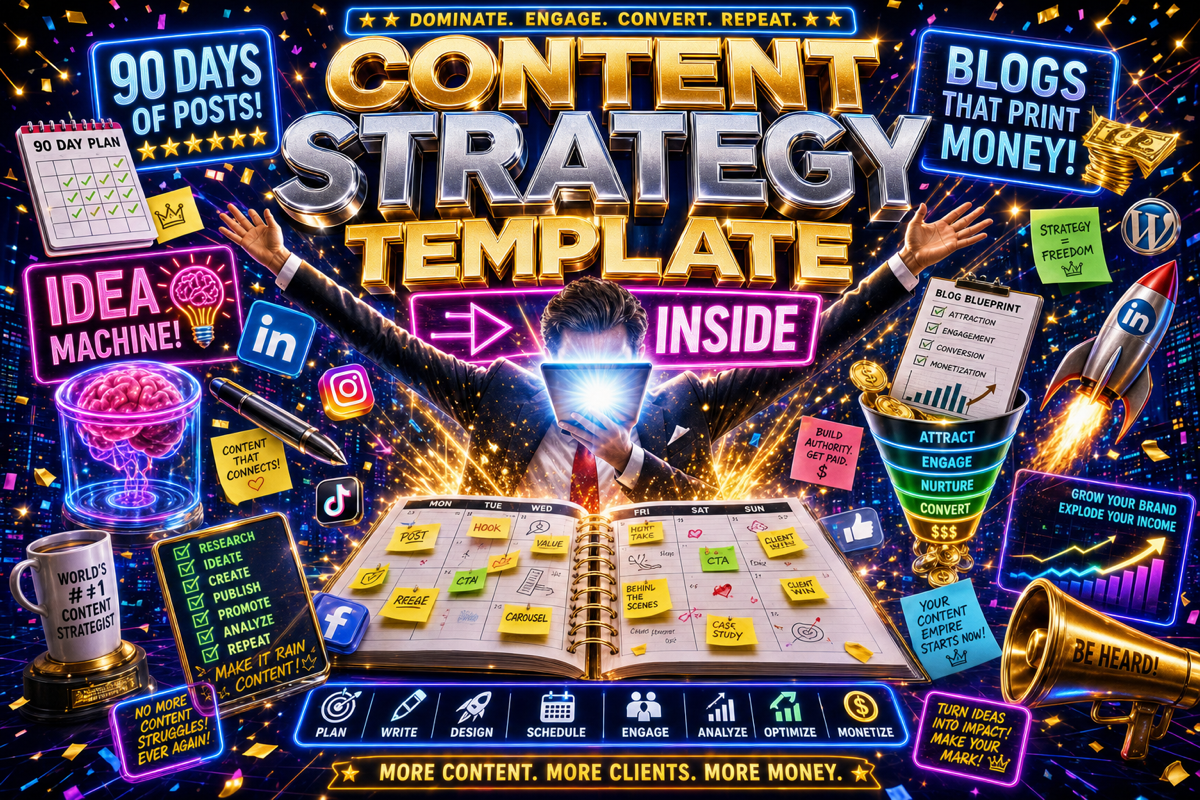
Week 1: film one video. Week 2: publish it across primary channel, transcribe to blog post, pull one quote for social. Week 3: repeat. The template is simple because it has to be, anything more complicated doesn’t survive contact with an actual week of running a business.
Build the habit first. Refine the system once it’s working.